5 Reasons DIY Drivers Are Skipping the $1,000 Body-Shop Quote and Pulling Dents Themselves
It hooks up to the air compressor already sitting in your garage and pulls shallow dents with pneumatic vacuum — no glue on your paint, no drilling, no “$450 shop minimum.” Body shops call it a toy. The guys posting their before-and-afters call it the best $65 in the garage. Here's why they keep winning the argument.
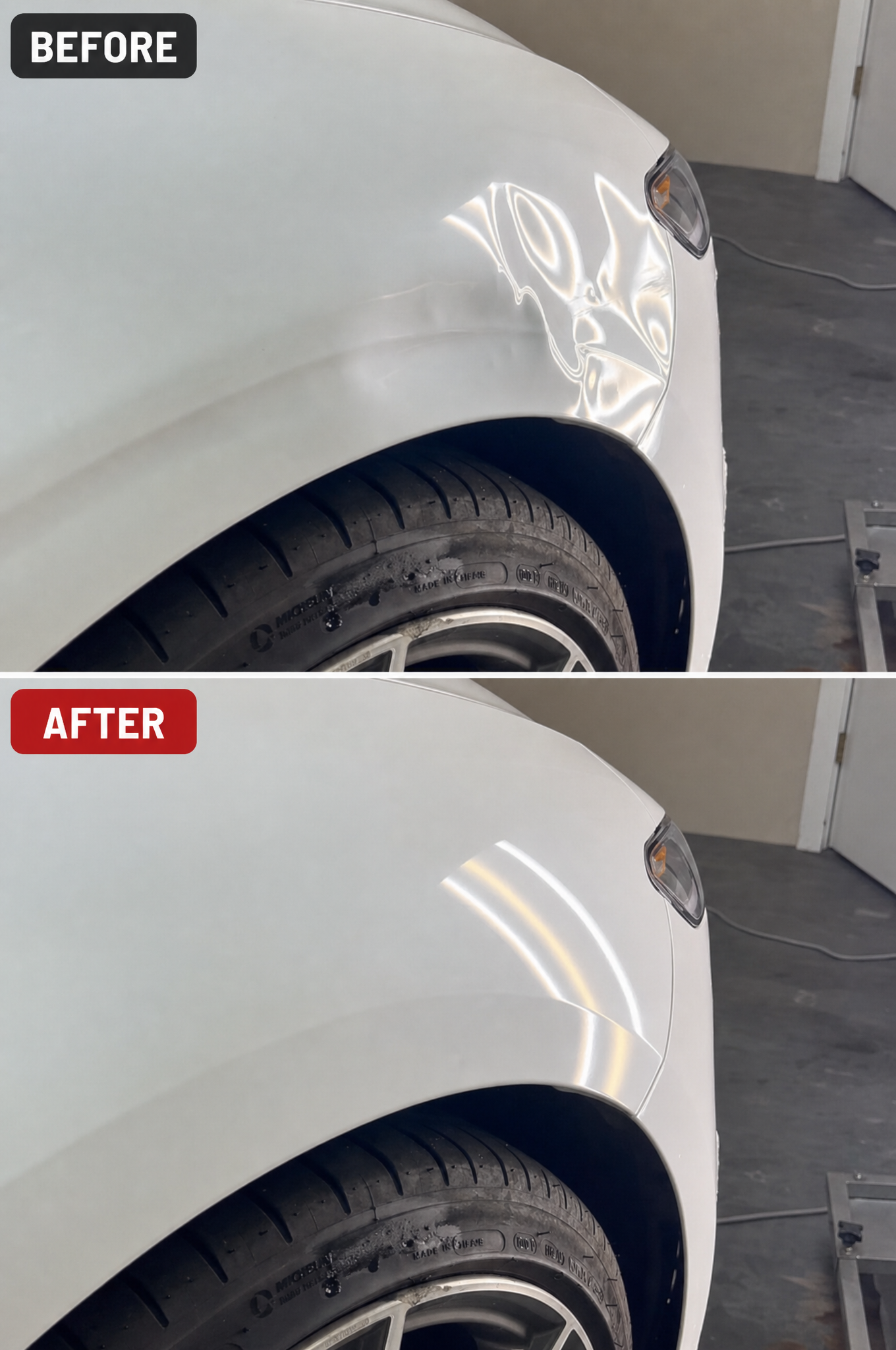
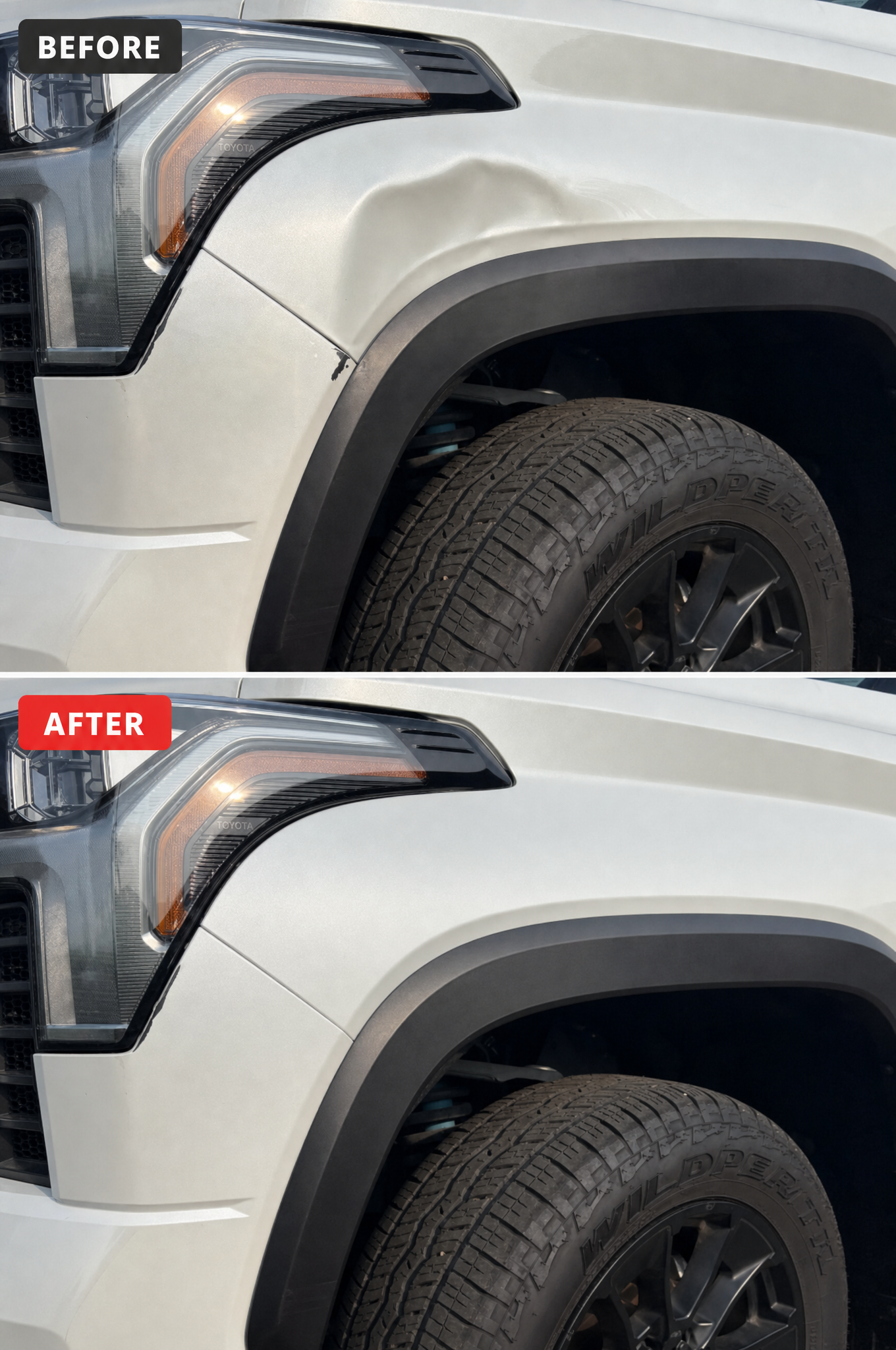
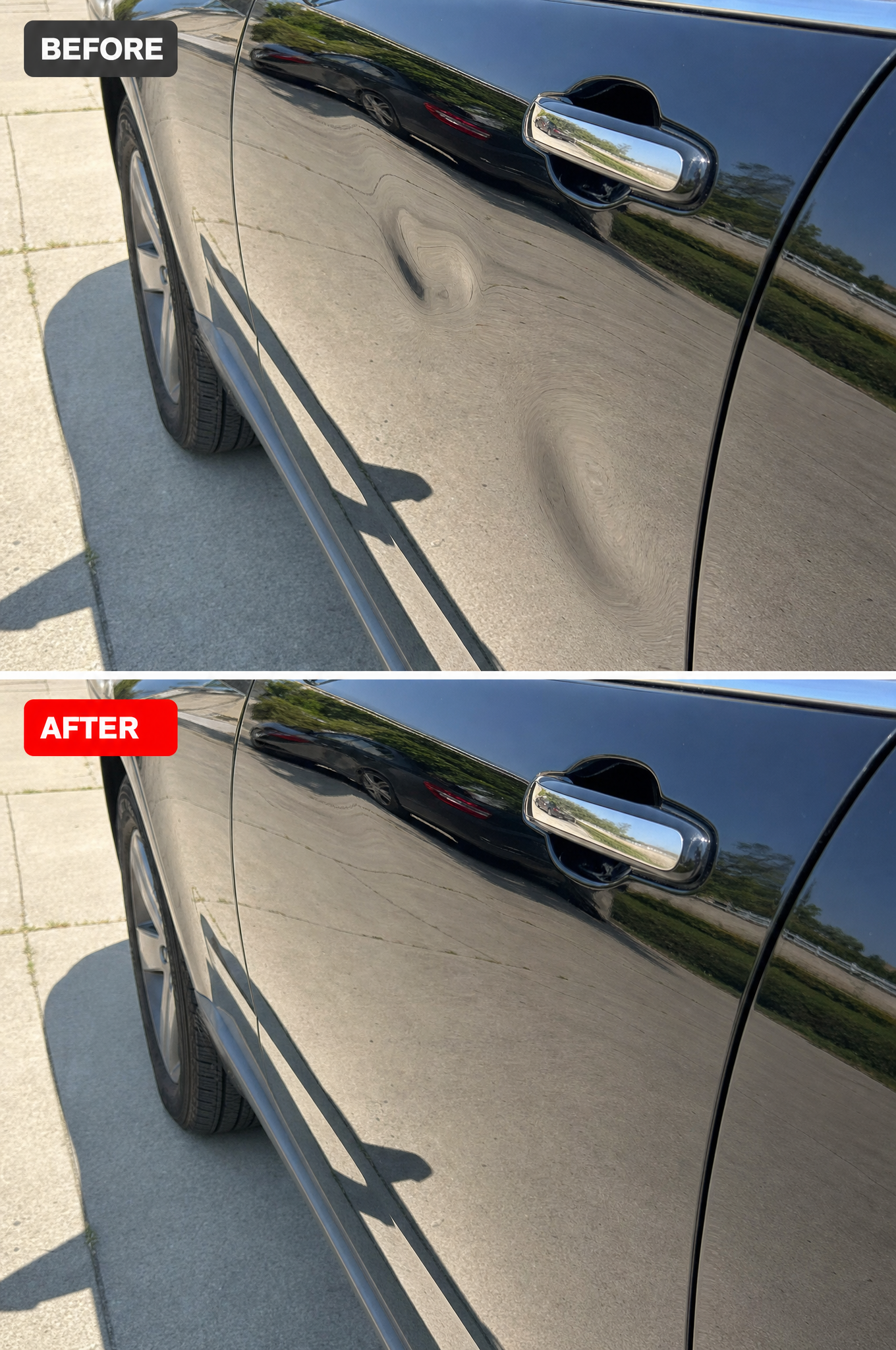
Your First Pull Takes About 60 Seconds — Hook Up. Seal. Pop.
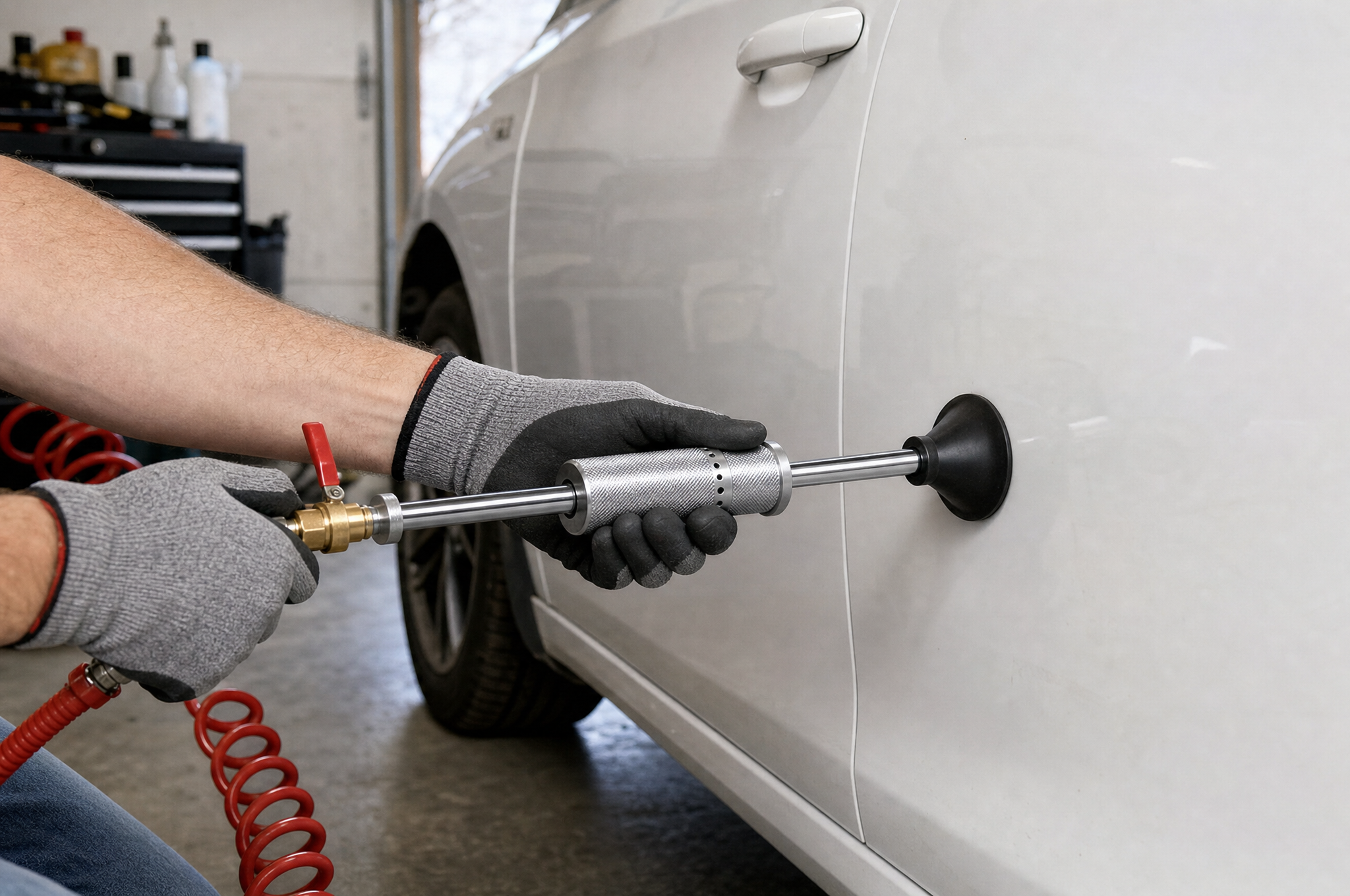
Connect it to your compressor with a standard 1/4" quick-connect fitting. Seal the rubber cup over the dent. Open the valve, then work the slide hammer with steady pulls — and watch the panel walk back to flat.
There's no technique to study and nothing to master first. If you can hook up an air hose, you can use it. Most first-timers see their dent moving inside 60 seconds — the trick is just going slow, working from the shallow edge of the dent inward.

One Door Ding Costs More at the Shop Than This Entire Tool
This is the math that started the whole argument. Body shops quote hundreds for a single shallow ding — and that's before the days without your car. One owner was quoted $650 for one door ding. Another got a $1,200 estimate for shallow hail dimples.
The tool is $64.95. Even if you only ever use it once, it can pay for itself many times over — and unlike the quote, it's still on your shelf for the next one.
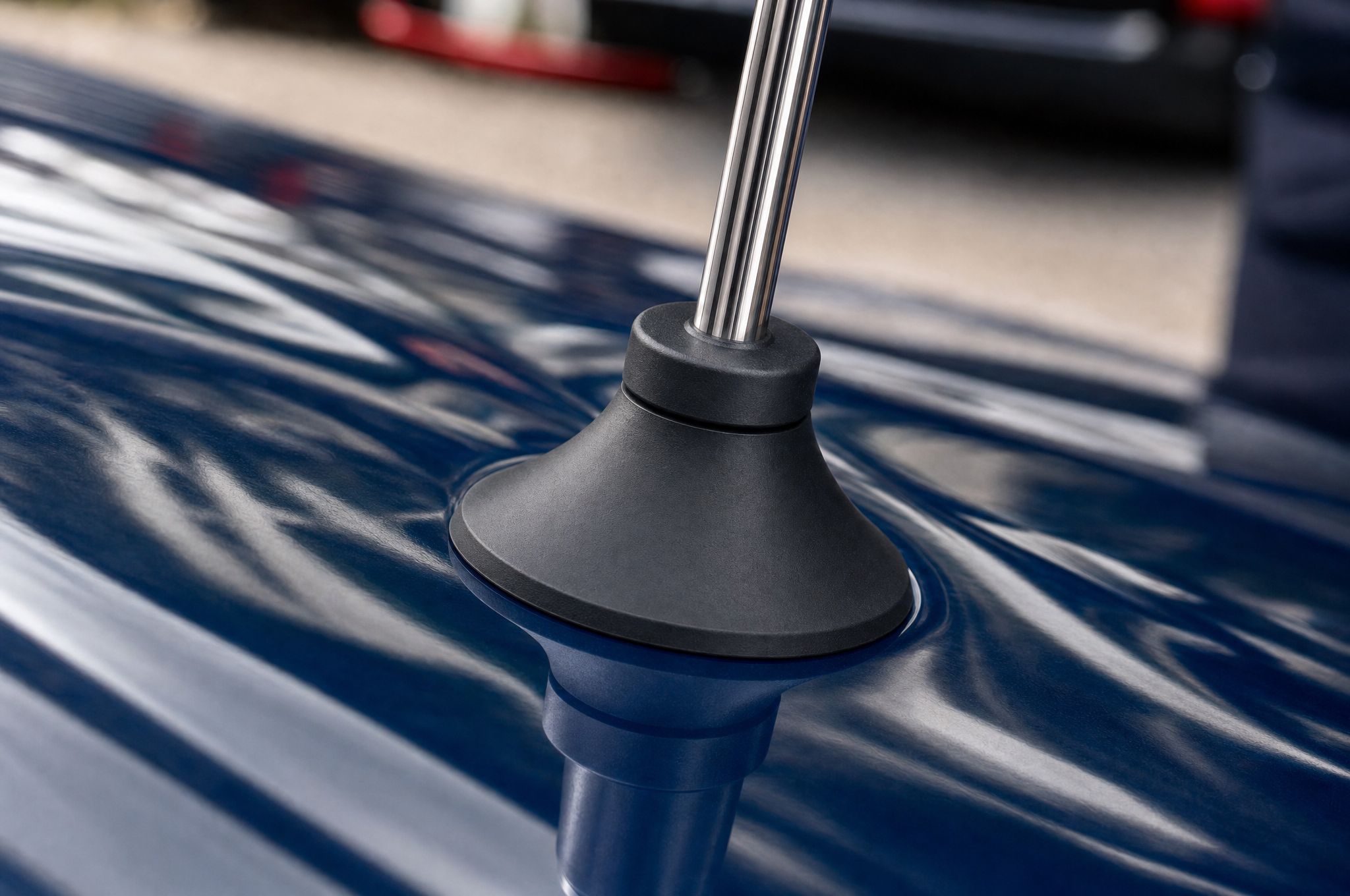
Pneumatic Vacuum Grips the Metal — Never Your Paint
Every cheap fix you've heard of attacks the dent through the paint. Hot glue tabs anchor to your clear coat and can pull it off. A plunger can't hold a seal on curved steel. Heat guns soften more than the dent.
This works on a different principle: compressor-driven pneumatic vacuum. The cup grips the face of the panel with regulated suction — a league beyond anything a plunger can pull — and the slide hammer delivers the force to the metal, not the finish. No glue, no drilling, no heat. Your factory paint stays put.
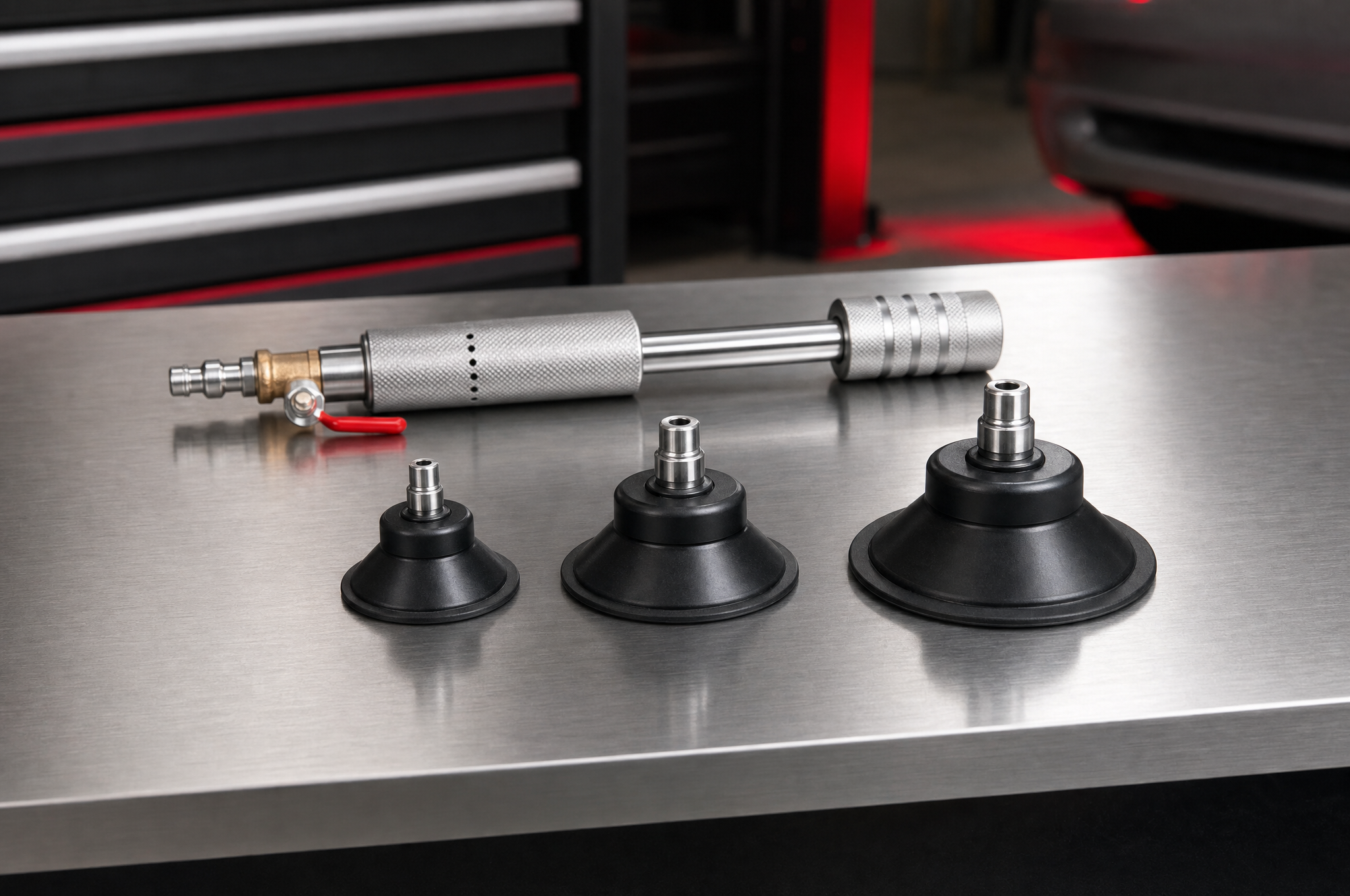
Built Like a Shop Tool — and Honest About What It Pulls
The body is knurled steel with a brass valve unit — it feels rock solid in the hand, nothing like the $20 plastic kits. Three rubber cup sizes come in every box (3.2", 4.7" and 6.1"), so shallow dents big and small get a matched seal: door dings, cart hits, hail dimples.
Straight talk, because it matters: it's built for shallow dents where the paint is intact on steel and aluminum panels. Sharp creases, dents on a body line, and plastic bumpers are body-shop territory — and any tool that tells you otherwise is lying to you.
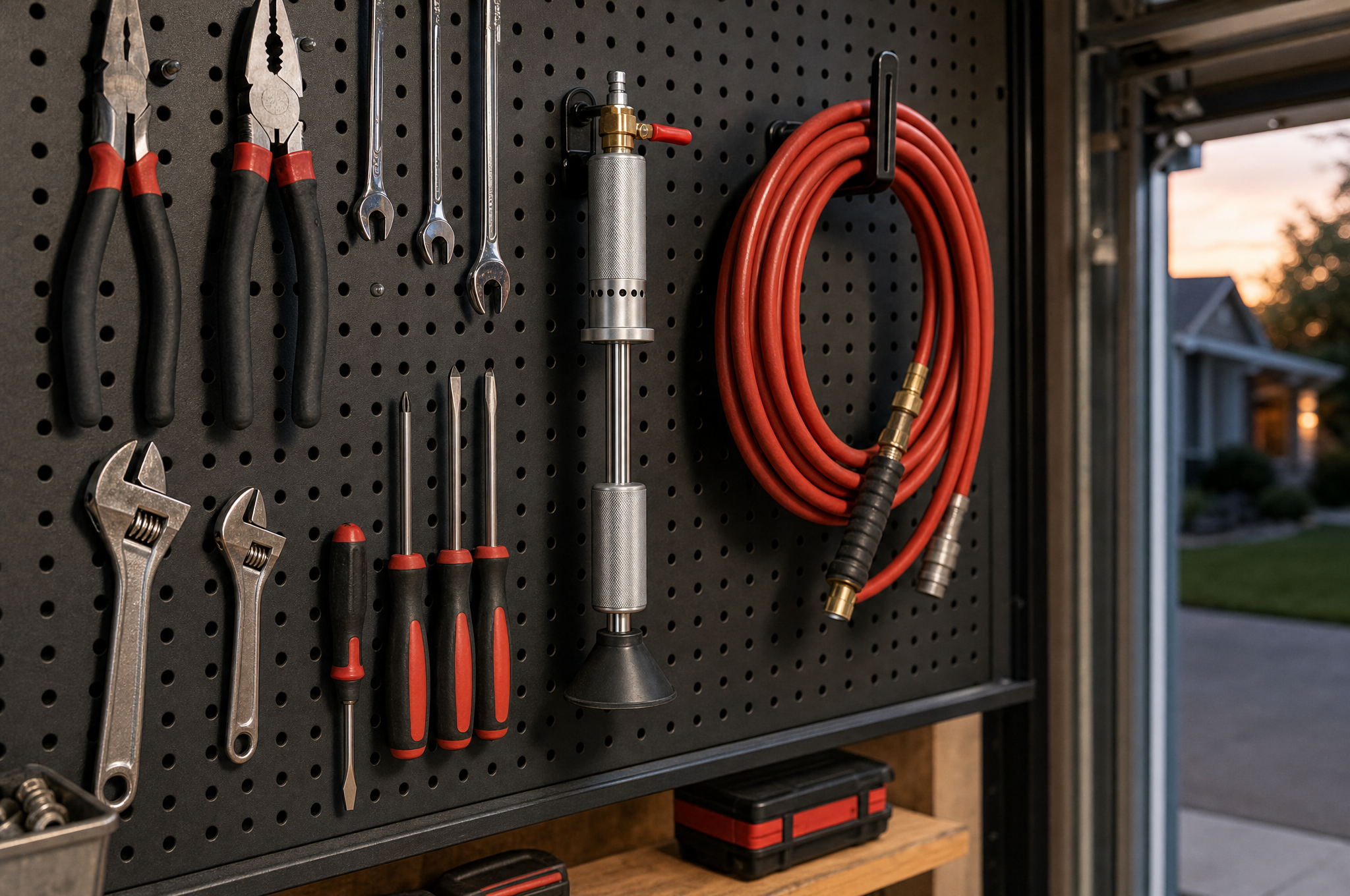
It Lives on the Garage Shelf — So the Next Ding Is a 60-Second Problem
Parking lots don't stop. Shopping carts don't stop. The difference is what happens next: a week of quotes and waiting rooms — or you, in your driveway, done before your coffee's cold. It's the difference between being the guy who pays a grand and the guy neighbors bring their door dings to.
12,000+ dents pulled in driveways so far — and 96% of owners say they'd buy it again, with one theme repeating in the reviews: it already paid for itself the first weekend.
The pneumatic dent puller the quote-skippers are talking about — a shop-grade vacuum pull that runs off the compressor you already own, built to erase shallow dents in about 60 seconds without touching your paint.
Get yours below ↓
A compressor-driven vacuum puller that erases shallow dents in about 60 seconds — and ships with every cup size the job could need.
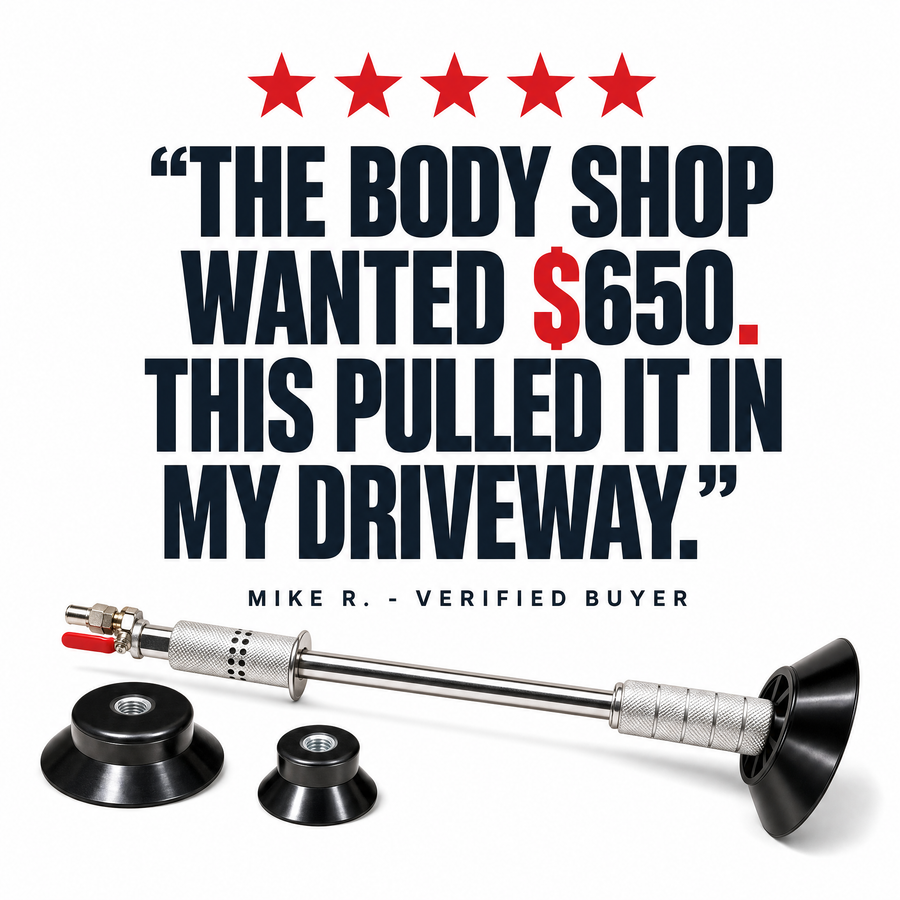
A quote is a week of phone calls, a loaner car, and hundreds of dollars you'll never see again. A pull is sixty seconds in your own driveway. Every driver eventually meets the next door ding — the only question is which one of those it turns into.
The next ding is coming. Sixty seconds — or a grand.
Get the Puller — 50% Off →